About Me
I also know what it’s like when that gets complicated and things start to feel more stressful than joyful. When you can feel your anxiety travel down the reins and see your horse shift in response. When you find yourself more irritable than excited. When the barn that you thought was a support becomes toxic and you think it’s you. These are things we cannot just ride through and hope get better. You deserve to feel joy and freedom in the saddle again.
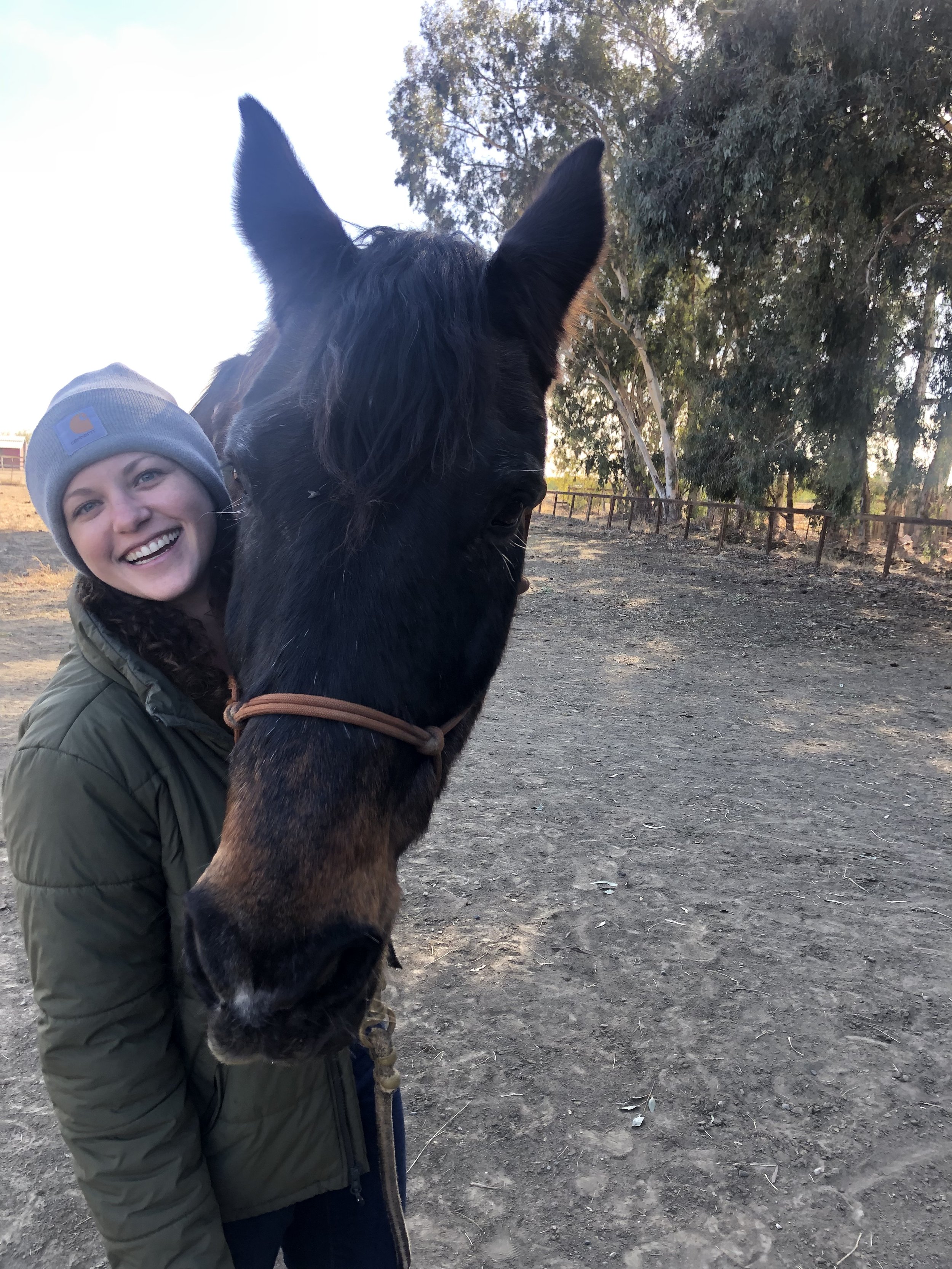
I'm Dr. Caroline Vetter, a licensed Clinical and Sport Psychologist, and a lifelong equestrian. I've competed and trained in Hunters and Equitation for most of my life. I recently started riding Dressage and I am being regularly humbled by the amount I need to keep learning. This sport is as much a part of my identity as my clinical work.
I know what it means to love this sport, the horses, the peace you feel when you ride.
I truly understand. I’ve had hard lessons, fallen off, been in the bottom of the class, navigated horses being injured, said goodbye to beloved equine partners, and come back to riding after serious injuries in the sport.
One of the things I have heard is that clients find that it is a relief to work with a provider who understands our sport through her own experience within it.
When your therapist or coach doesn't know the sport, you spend your sessions translating the language of our equestrian world. Describing how judging at shows works, what it feels like to be out of sync with your horse, what toxic barn culture is really like. That's time and energy that deserves to be spent on helping you build tools and understand what is getting in the way, not to building context.
Being an equestrian myself means we can spend our time talking about what actually matters sooner.
Training and Approach
I hold a Doctorate in Clinical Psychology (Psy.D.) from The Wright Institute in Berkeley, California, and am licensed as a psychologist in both California (PSY32615) and Oregon (#3481).
My approach includes various therapeutic modalities including Acceptance and Commitment Therapy (ACT), mindfulness, somatic-based practice, and self-compassion work. I also incorporate aspects of relational psychodynamic therapy, feminist therapy and narrative therapy in my work with clients. I know this some of these titles and names don’t actually tell you much about how I work with you, so to make it simple, I use a combination of evidenced-based tool building and a deeper understanding of human psychology and how we related to others and the world to help you not only have tools to work toward your goals but also understand your partnership with your horse on a deeper level.
After getting licensed and beginning my work with equestrians I decided to focus my career to supporting equestrians. I have extensive clinical training in anxiety, trauma and PTSD, perfectionism, depression and self-criticism. I've hosted multiple sport psychology clinics, collaborated with trainers, and served as a mentor through the Optimum Youth Equestrian Scholarship. My research background includes a doctoral dissertation focused on equine-assisted psychotherapy.
Dissertation Research: Equine-Assisted Psychotherapy for United States Veterans with Posttraumatic Stress Disorder
I believe that the psychological work of riding isn't separate from our whole selves. We bring to the barn all aspects of our lives and all aspects of who we are. My approach integrates the mental, emotional, and somatic of what it means to be in relationship with a horse.
What is the difference between a Psychologist and a Mental Skills Coach?
You may have heard of mental skills coaches within the sport and performance world, and they can be a valuable resource for performance-focused work such as goal setting, visualization, focus, and pre-competition routines as a few examples.
Here's what's different about working with a licensed psychologist who also specializes in sport:
A psychologist can support you on the performance layer and the clinical layer underneath it, addressing the complex anxiety, the trauma from a fall, the perfectionism that isn’t just at the barn, the depression that's masking itself as burnout.
Mental skills coaches are not licensed clinicians. They cannot diagnose or treat anxiety, PTSD, trauma, or other clinical presentations.
If you've tried working on your mindset before and felt like something was missing, this might be why.
You don't have to be at your worst to want things to be better.
We are a tough breed. We fall off and then spend an hour making sure our horse is well cared for, drive home, eat a pb&j and hope that tomorrow we aren’t as sore as we know we will be. Even so, some things cannot be toughed out, one of those is broken bones after a fall, another is less visible and more sneaky, the mental side of riding. If we don’t pay attention to it we are missing one of the largest aspects of our riding that could be the key to unlocking a new level of partnership with our horse.